Sequins, Silhouettes, and Staying Power: The Fashion Legacy of Debbie Reynolds
Photo: Employee(s) of MGM, Public domain, via Wikimedia Commons
Fashion in Hollywood has always been about more than clothes. It's about character, era, and the particular kind of story a studio — or a star — wants to tell. Debbie Reynolds understood that instinctively, and it showed in every costume fitting, every red carpet appearance, and every carefully chosen gown she wore over a career that spanned more than seven decades.
She wasn't a fashion icon in the conventional sense — she didn't have the ice-queen remove of Grace Kelly or the provocative edge of Marilyn Monroe. What she had was something arguably harder to pull off: a consistent, joyful, deeply personal sense of style that evolved with the times without ever abandoning the woman underneath.
The MGM Years: Wholesome With an Edge
In the early 1950s, MGM's costume department was one of the most powerful forces in American fashion. The studio dressed its stars the way it cast them — with a specific image in mind, and the resources to make that image stick.
For Reynolds, the look was fresh-faced and youthful, but with considerably more spark than the term "girl next door" usually implies. The costumes she wore in Singin' in the Rain — those full skirts and fitted blouses — were technically modest by Hollywood standards, but they moved beautifully on screen. Costume designer Walter Plunkett understood that Reynolds' physicality was part of her appeal, and he designed accordingly: clothes that could survive a dance number without losing their shape or their charm.
Off-screen, Reynolds was developing her own sensibility during this period. She favored bright colors at a time when many of her contemporaries stuck to neutrals, and she had an instinct for proportion — pairing full skirts with cinched waists, or offsetting a simple silhouette with a bold accessory — that felt genuinely her own rather than studio-mandated.
The 1960s: Finding Her Own Voice
The shift into the 1960s was a tricky one for many stars of Reynolds' generation. The decade's fashion revolution — think mod cuts, graphic prints, and hemlines that kept climbing — didn't always play nicely with the more structured glamour of the previous era.
Reynolds navigated it with characteristic practicality. She didn't chase trends for their own sake, but she wasn't allergic to them either. Her wardrobe during this period shows a performer who was paying attention to what was happening around her and making selective choices about what to absorb.
The costumes from The Unsinkable Molly Brown are worth singling out here. Designed by Morton Haack, they had to do double duty — conveying both the rough-hewn origins of Molly Brown's character and her eventual ascent into high society. Reynolds wore both ends of that spectrum convincingly, which says something about her ability to inhabit clothes rather than just wear them. The beaded gowns from the film's later sequences became some of the most recognizable looks of her career.
Red Carpet Moments That Became Reference Points
Reynolds' red carpet presence over the decades was remarkable for its consistency of spirit, if not always of silhouette. She wore sequins the way other women wear jeans — comfortably, confidently, and often. She had a particular fondness for beading and embellishment that ran through her public wardrobe from the 1960s all the way to her final public appearances.
What made her red carpet choices interesting wasn't any single iconic look, but rather the cumulative effect of decades of choices that said the same thing: I am here, I am happy to be here, and I dressed accordingly.
Some of her most memorable public appearances came in the later decades of her career, when many actresses of her generation had retreated into safe, understated dressing. Reynolds kept reaching for the statement piece, the bold color, the dress that was going to be visible from the back of the room. It was partly showmanship, but it was also genuine. She liked clothes that made an entrance.
The Costume Collection: Fashion as Preservation
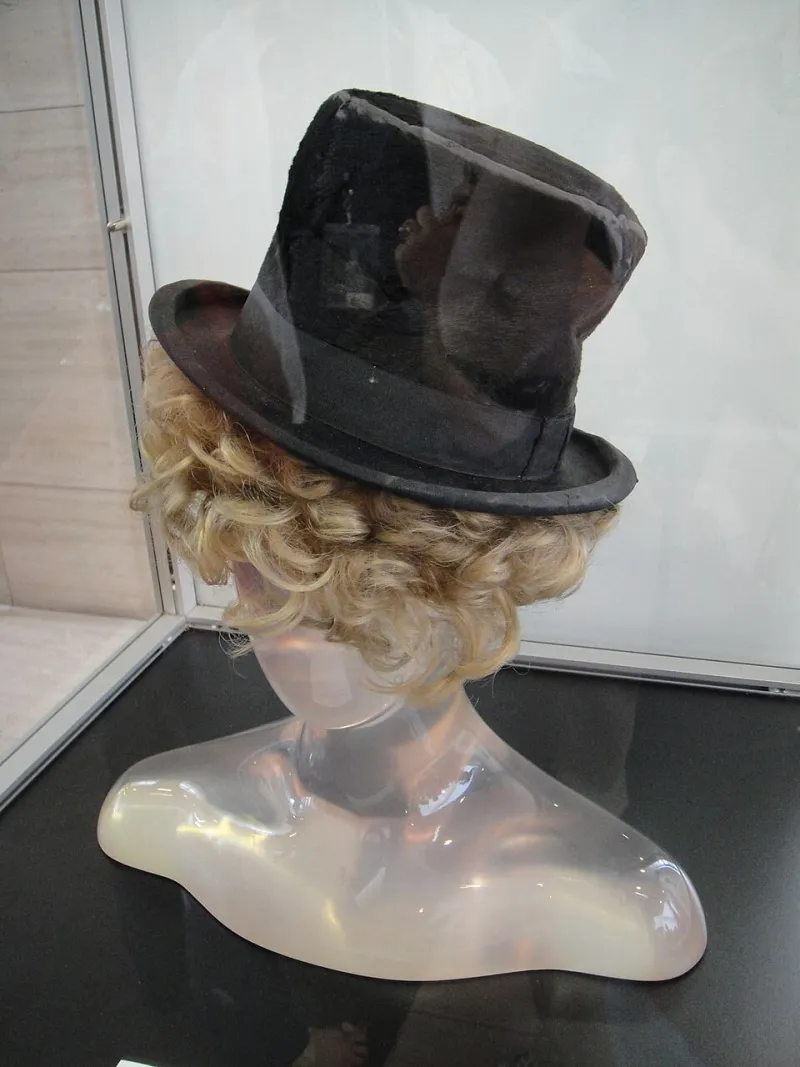
No discussion of Debbie Reynolds and fashion is complete without acknowledging her legendary personal collection of Hollywood costumes — one of the most significant private archives of film wardrobe in history. Reynolds spent decades acquiring pieces from the golden age of Hollywood costuming: Marilyn Monroe's dress from Bus Stop, Judy Garland's ruby slippers, Elizabeth Taylor's gowns from Cleopatra.
The collection was, among other things, a statement about the value of fashion history. Reynolds understood — before most of Hollywood did — that these costumes weren't just props or production materials. They were artifacts. They told the story of an industry and an era in a way that film stills and press releases couldn't quite capture.
Her efforts to preserve and eventually auction that collection became one of the defining stories of her later career. The 2011 auction at Profiles in History drew international attention and raised millions of dollars, but for Reynolds, the real achievement was the years of curation that preceded it. She was, among her many other roles, a fashion historian.
What Her Style Actually Said
Look at photographs of Debbie Reynolds across the span of her public life and a few things become clear pretty quickly. She never looked uncomfortable. She never looked like she was wearing someone else's idea of what she should look like. And she almost always looked like she was having a good time.
That last quality is underrated in discussions of style. Fashion can be many things — armor, aspiration, provocation — but joy is one of its most powerful registers, and Reynolds deployed it consistently. Her clothes said: I love this, I chose this, and I'm not apologizing for any of it.
In an industry that has often been unkind to women who age visibly and publicly, that refusal to shrink — sartorially or otherwise — was its own kind of statement. Reynolds dressed like a woman who intended to keep showing up, and she did.
A Legacy Stitched Into Hollywood's History
Debbie Reynolds' fashion legacy isn't about any single dress or any single decade. It's about the full arc — from the bright-eyed MGM ingénue in her full circle skirts to the sequin-clad legend who lit up every room she walked into well into her eighties.
She wore Hollywood's history on her back, sometimes literally, and she did it with a grace and a sense of humor that made the whole thing look effortless. For fans who have followed her career from the beginning, those clothes are more than costumes. They're chapters in a story we never wanted to end.