What Debbie Reynolds' Legendary Hollywood Auction Told Us About a Career — and a Calling
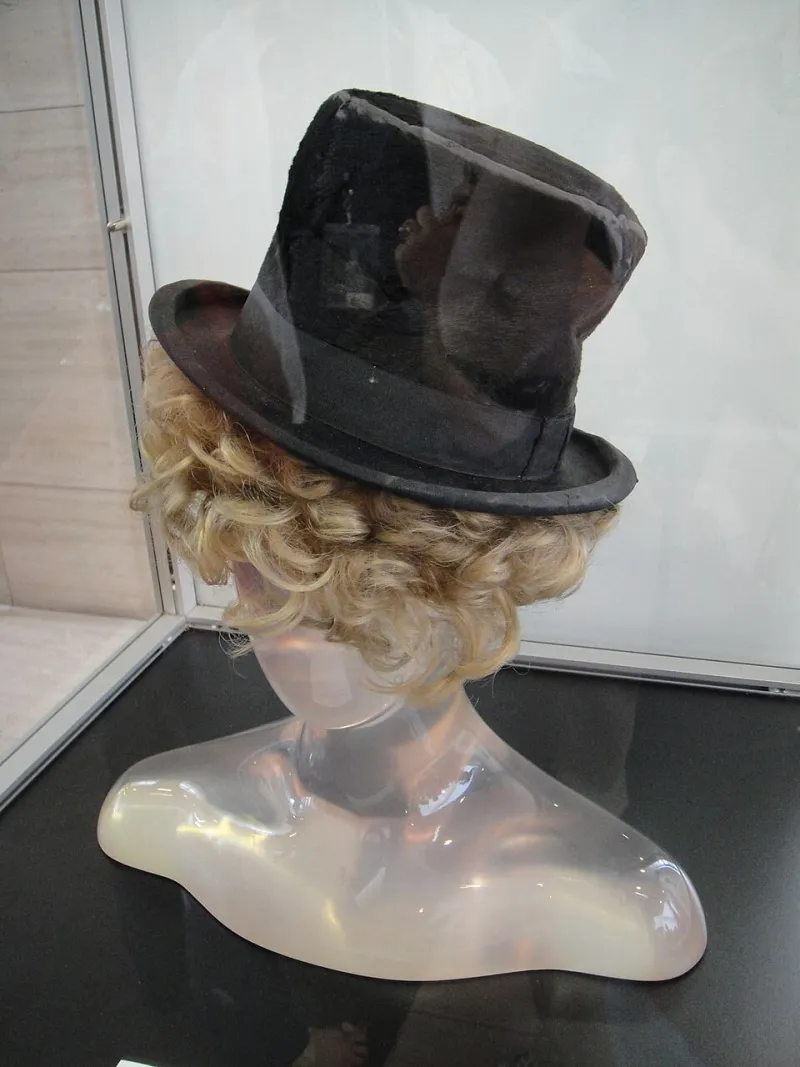
Photo: Doug Kline from Los Angeles, CA, USA, CC BY 2.0, via Wikimedia Commons
Most celebrities collect things — awards, press clippings, maybe a few personal mementos from memorable projects. Debbie Reynolds collected history.
For nearly five decades, she quietly accumulated one of the most significant private collections of Hollywood artifacts ever assembled. Costumes worn by Audrey Hepburn, Marilyn Monroe, and Elizabeth Taylor. Props from films that defined American cinema. Photographs, scripts, and personal effects from the golden age of a dream factory that had largely forgotten it ever produced such things. When the 2011 auction of her collection finally took place through Profiles in History, the entertainment world got a stunning look at just how much of its own past Debbie Reynolds had been safeguarding — often at considerable personal expense.
The auction didn't just raise money. It told a story.
How the Collection Began
Reynolds started acquiring pieces in the late 1960s and early 1970s, at a time when the major studios were liquidating their prop and wardrobe departments with alarming indifference. MGM, the very studio that had launched her career, held a series of auctions in 1970 that Reynolds described as devastating. Iconic costumes were being sold for next to nothing, and nobody in the industry seemed particularly concerned about preserving them.
She was. She spent her own money — a lot of it — buying pieces at those MGM sales and elsewhere, driven by a conviction that these objects were cultural artifacts deserving of protection. Her original vision was to open a Hollywood museum, a permanent home where the public could connect with the physical remnants of cinema's most glamorous era. She pursued that dream for years, at various points negotiating with cities including Las Vegas and Branson, Missouri, to find a suitable venue.
The museum never materialized the way she envisioned it. Funding fell through. Deals collapsed. And the cost of storing and maintaining thousands of delicate items added up over the years. By 2011, Reynolds made the painful decision that auctioning the collection was the most responsible path forward — both financially and in terms of ensuring the pieces ended up in appropriate hands.
"I've been the caretaker," she said at the time. "Now it's time to pass them on."
The Headline Pieces
The auction generated enormous media coverage, and for good reason. The items on offer read like a syllabus for a course in American film history.
Marilyn Monroe's subway dress from The Seven Year Itch — arguably the single most recognizable costume in Hollywood history — sold for $5.52 million, setting a world record for a costume at auction. Reynolds had purchased it decades earlier and had it stored carefully, understanding its significance long before the broader culture caught up.
Audrey Hepburn's black Givenchy gown from Breakfast at Tiffany's was another standout, as was the blue-and-white gingham dress Judy Garland wore as Dorothy in The Wizard of Oz. That dress sold for $480,000. The sheer breadth of what Reynolds had accumulated was staggering — over 3,500 lots in total, spanning everything from Charlie Chaplin's cane to elaborate Cecil B. DeMille production pieces.
Each item came with provenance documentation that Reynolds had painstakingly maintained. She hadn't just collected these things — she had archived them.
The Personal Pieces and What They Revealed
Beyond the headline-grabbing items associated with other stars, the auction also offered glimpses into Reynolds' own remarkable career and personal life. Her costumes from Singin' in the Rain, The Unsinkable Molly Brown, and other productions were included, and they drew serious interest from collectors who recognized their historical significance.
Perhaps more telling were the items connected to her relationships. Reynolds and Elizabeth Taylor had one of Hollywood's most storied friendships — complicated, tested, ultimately enduring. Several items in the collection had Taylor connections, and their presence spoke to the complexity and depth of that bond. Reynolds had held onto things that lesser people might have discarded out of bitterness, and that said something important about her character.
There were also pieces tied to her marriages, her children (Carrie Fisher and Todd Fisher), and her stage career — a reminder that Reynolds' life in entertainment was far more layered than any single film or era could capture. The collection, taken as a whole, was essentially a three-dimensional autobiography.
The Broader Cultural Conversation
The 2011 auction sparked a genuine debate in the entertainment industry about the preservation of film history. Reynolds had been doing, largely alone and at personal cost, what many argued institutions should have been doing all along. The Library of Congress, the Smithsonian, and various film archives have preservation mandates, but the physical objects — the costumes, the props, the tangible artifacts — had largely been left to the market.
Her collection's dispersal was bittersweet precisely because it illustrated the gap. Some pieces went to museums and institutions that could properly care for them. Others went to private collectors, disappearing from public view. The Hollywood Museum in Los Angeles, which Reynolds had long supported, acquired some items. But the dream of a single, comprehensive home for the collection never came together.
In interviews around the time of the auction, Reynolds expressed both relief and sadness. She was glad the pieces would be cared for by people who valued them. She was heartbroken that the museum hadn't happened. "I tried everything," she said. "I really did."
A Legacy That Goes Beyond the Screen
Debbie Reynolds is celebrated — rightly — for her performances, her voice, her comedy, her resilience. But the story of her collection adds another dimension to her legacy that doesn't always get the attention it deserves.
She understood, intuitively and early, that the physical history of Hollywood was fragile and finite. She acted on that understanding when no one else was, putting her own resources behind a conviction that these objects mattered. That they told stories. That they connected generations of audiences to something larger than any individual film or star.
The auction of 2011 was, in a sense, the final chapter of that story — a dispersal rather than a preservation, but one handled with the same care and intentionality she had brought to every acquisition. The pieces found new homes. The record prices they commanded validated, in the most concrete possible terms, what Reynolds had always believed: this stuff matters.
For those of us who celebrate her legacy here at Debbie Reynolds Online, that conviction is part of what makes her so extraordinary. She wasn't just a product of Hollywood's golden age. She was one of its most devoted guardians.