She Refused to Disappear: How Debbie Reynolds Rewrote the Rules on Aging in Hollywood
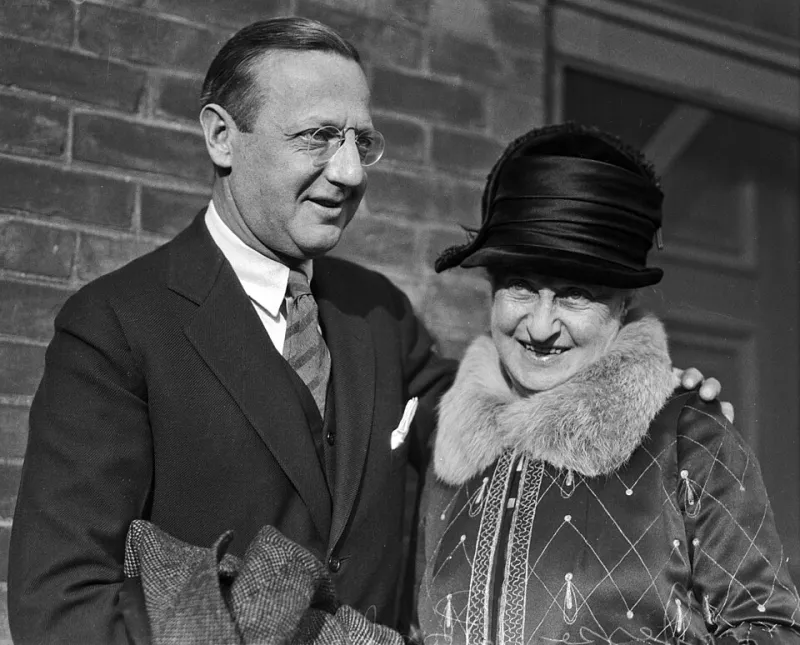
Photo: Los Angeles Daily News, CC BY 4.0, via Wikimedia Commons
There's a moment in almost every Hollywood legend's story where the industry quietly decides it's done with them. The phone calls slow down. The parts get smaller. The press stops asking. For women especially, that moment has historically arrived with brutal efficiency — somewhere around the time a performer hits her fifties, give or take a decade depending on how well she played by the rules.
Debbie Reynolds didn't play by those rules. Not even a little.
What Reynolds did — across the final three or four decades of a career that already spanned half a century — wasn't just admirable on a personal level. It was genuinely disruptive. She stuck around long enough and loudly enough that Hollywood eventually had to reckon with the fact that audiences still wanted her there. And that reckoning, quiet as it was, helped shift something real in the way the entertainment industry thought about aging performers.
The Industry's Dirty Little Secret
Ageism in Hollywood isn't exactly a breaking news story. It's been baked into the system since the studio era, when stars were manufactured, managed, and eventually discarded with the kind of cold efficiency that would make a supply chain manager blush. Women, in particular, have always faced a narrower window — expected to be ingénues first, leading ladies second, and then largely decorative or comedic footnotes after that.
The unspoken contract was simple: you could age gracefully, but you had to do it quietly. Step back. Let the younger generation have the floor. Make room.
Reynolds never got that memo, or if she did, she filed it somewhere very far away.
By the time the 1980s rolled around, many of her peers from the golden MGM era had either passed away, retired, or retreated into occasional nostalgia appearances. Reynolds was out there doing Las Vegas residencies with the kind of physical commitment that would exhaust performers half her age. She was taking television roles that put her front and center, not tucked into a supporting corner. She was touring. She was talking. She was present.
Reinvention as Resistance
What made Reynolds' approach so quietly radical was that she didn't just persist — she evolved. There's a difference between an aging star clinging to a past identity and one who actively seeks out new creative territory. Reynolds understood that distinction instinctively.
Her willingness to lean into self-aware humor about her own legend — something she did brilliantly in projects like Will & Grace, where she played Grace's overbearing mother Bobbi Adler — showed a performer who wasn't precious about her image. She could poke fun at the very mythology that surrounded her name, and audiences loved her all the more for it. That kind of creative flexibility isn't easy. It requires a real security in who you are, and Reynolds had that in spades.
Each decade brought a different version of Debbie Reynolds to the table. The 1970s gave us a performer leaning into nightclub entertainment with genuine showbiz craftsmanship. The 1980s and 1990s revealed a sharper comedic edge. The 2000s and beyond showcased a woman fully comfortable with her status as a living piece of Hollywood history — but never content to simply coast on it.
That constant reinvention sent a message to the industry, whether it intended to or not: this woman still has something to offer, and audiences are still paying attention.
The Ripple Effect
It's impossible to draw a straight line from Debbie Reynolds' career longevity to specific industry changes — that's not how cultural shifts work. But it's worth noting that the conversation around older performers in Hollywood has meaningfully shifted over the past couple of decades, and women like Reynolds were part of the reason why.
When performers like Betty White experienced massive career revivals, or when actresses in their sixties and seventies started landing complex, leading roles in prestige television, it reflected an industry slowly waking up to something audiences had known for a while: older performers bring something irreplaceable to the screen. Depth, timing, lived-in authenticity. Reynolds embodied all of that, and she embodied it loudly and consistently for long enough that it became impossible to ignore.
Younger performers who came up watching Reynolds — whether they were conscious of it or not — absorbed the lesson that a career didn't have to end just because someone in a studio office decided it should. That you could fight for your place at the table. That you could remain vital and relevant not by pretending to be younger, but by fully owning every year you'd earned.
Visibility as a Political Act
There's something almost quietly political about what Reynolds did, even if she never framed it that way herself. In an industry that routinely rendered older women invisible, she simply refused to become invisible. She kept showing up. She kept performing. She kept giving interviews, accepting awards, and engaging with fans in a way that said, clearly and without apology: I'm still here, and I still matter.
That visibility mattered beyond just her own career. Every time Reynolds appeared on a late-night show at seventy-something and brought the house down, it chipped away — just a little — at the assumption that older women in entertainment were past their sell-by date. Every standing ovation she received in Las Vegas was a small data point against the industry's conventional wisdom.
Representation works that way. When people see someone like themselves doing something remarkable, it expands their sense of what's possible. For older performers watching Reynolds work, the message was clear: don't let them push you out.
What Her Legacy Actually Means
We talk a lot about Debbie Reynolds in terms of Singin' in the Rain and her extraordinary early career, and rightly so — that work is genuinely foundational. But her later decades deserve just as much attention, because that's where she did something arguably harder than starring in a classic musical.
She stayed. She adapted. She thrived.
In doing so, she helped rewrite a narrative that Hollywood had been telling for generations — that a woman's value as a performer has a shelf life, and that the graceful thing to do is accept it when time's up. Reynolds rejected that narrative completely, and the entertainment landscape is a little bit better, a little bit more honest, because she did.
For fans who've followed her journey from her early MGM days all the way through her final performances, that persistence is part of what made her so beloved. She wasn't just a star from another era. She was proof that greatness, when it's real, doesn't have an expiration date.
And she made sure everyone knew it.