Small Town Soul, Hollywood Shine: How Debbie Reynolds' Humble Roots Made Her the Real Deal
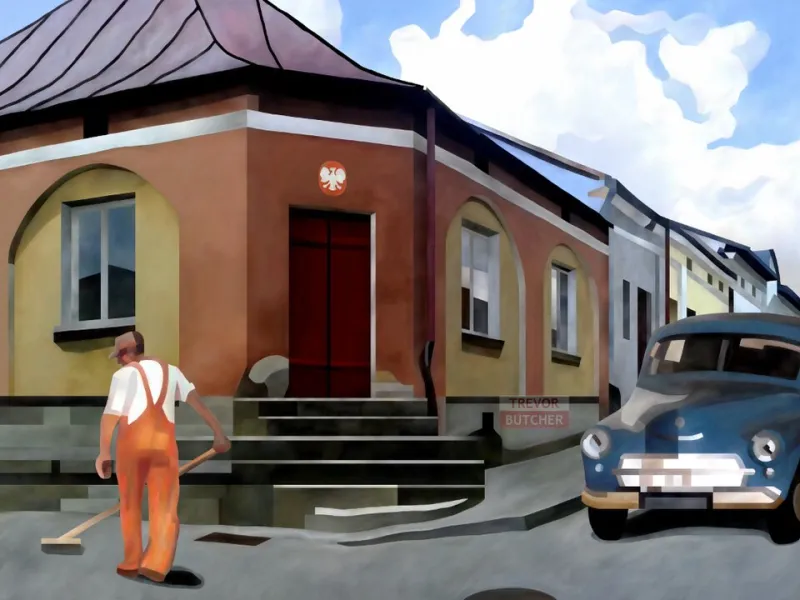
Photo: Trevor Butcher from Poland, CC BY 2.0, via Wikimedia Commons
Hollywood has always had a complicated relationship with authenticity. For every star who managed to hold onto who they were before the fame arrived, there were dozens more who got swallowed whole by the machine. Debbie Reynolds was never one of those. From her very first screen appearance to her final curtain calls decades later, she carried something with her that no studio contract or acting coach could manufacture — a bone-deep realness that audiences recognized immediately and never stopped responding to. And if you want to understand where that quality came from, you have to go back long before MGM ever entered the picture.
El Paso, Texas: Where It All Began
Mary Frances Reynolds was born in El Paso on April 1, 1932, and the city she came into was a working-class, sun-baked border town where nobody had much and everyone pretty much knew it. Her father, Raymond Francis Reynolds, worked as a carpenter for the Southern Pacific Railroad. Her mother, Maxene, kept the household running on a budget that left very little room for extras. It wasn't a life of hardship in the dramatic sense, but it was a life where you understood the value of a dollar, the importance of showing up, and the idea that nobody was going to hand you anything you hadn't earned.
Those lessons sank in early. Reynolds would later describe her childhood as happy but unpretentious — a word that, looking back on her career, feels like a perfect preview of everything she became. In a town like El Paso in the 1930s, there was no room for putting on airs. You were who you were, and the people around you knew it.
The Hawaii Years and a Different Kind of Education
When Reynolds was still a young girl, the family relocated to Burbank, California, and later spent time in Hawaii — specifically the small community of Ewa Beach on Oahu, a plantation town that was about as far from the Hollywood Hills as you could get in terms of culture and attitude. Life there moved at a different pace. The community was tight-knit, diverse, and deeply unpretentious in its own right. For a kid with big energy and a natural performer's instincts, it was an interesting place to grow up — one that exposed her to a broader cross-section of American life than most of her future co-stars ever encountered.
That exposure mattered. Reynolds grew up around people of different backgrounds, different economic circumstances, and different definitions of what success looked like. It gave her a kind of social fluency that would later translate directly into her ability to connect with everyday audiences — the secretaries and factory workers and schoolteachers who bought movie tickets on Friday nights and wanted to see someone on screen who felt like a real person, not a gilded statue.
What Burbank Actually Taught Her
By the time the Reynolds family settled in Burbank for good, the city was a working-class suburb defined largely by the entertainment industry's support staff — the grips, the seamstresses, the truck drivers who kept the studios running. It was not, to put it plainly, Beverly Hills. And that proximity to the industry without immersion in its excesses gave young Mary Frances a useful perspective: she could see the dream machine up close without being seduced into thinking the glamour was the point.
She attended Burbank High School, where she was a Girl Scout, a majorette, and a genuinely popular kid — not because she was performing popularity, but because she was friendly, funny, and unpretentiously herself. When she won a talent contest at sixteen and landed her first contract with Warner Bros., she brought all of that with her. The studio system was designed to reshape performers into idealized versions of themselves. With Reynolds, it mostly just got out of the way.
Refusing to Play the Hollywood Game
Once Reynolds found her footing at MGM — where she'd been transferred after Warner Bros. — she quickly became one of the studio's brightest properties. Singin' in the Rain in 1952 made her a genuine star. But even as the fan mail piled up and the magazine covers multiplied, people who worked with her consistently noted the same thing: she didn't change. She was still the girl from Burbank who thought the whole celebrity apparatus was a little bit ridiculous.
In an era when Hollywood stars were expected to maintain a certain mystique — to be remote, glamorous, and carefully managed — Reynolds had a habit of puncturing the pretension. She laughed too loudly, told jokes at her own expense, and talked about money and hard work in ways that made publicists nervous but endeared her to the public enormously. She wasn't performing down-to-earthness. She genuinely was down to earth, and the difference was unmistakable.
Contemporaries who leaned into the grand Hollywood persona — the affected accents, the carefully curated mystique — often found that audiences eventually tired of the performance. Reynolds never had that problem. There was nothing to see through because there was no facade to begin with.
The Audience Always Knew
There's a reason Debbie Reynolds remained a beloved figure across seven decades of American entertainment when so many of her contemporaries faded or fell from grace. Part of it was talent, obviously — she could sing, dance, act, and do comedy at a level very few performers ever matched. But talent alone doesn't explain longevity like hers. What kept audiences coming back, generation after generation, was trust. They trusted her. They believed her. And that belief was rooted in something they sensed from the very beginning: this woman is not pretending to be something she isn't.
That quality — call it authenticity, call it groundedness, call it just being real — was not something Reynolds developed as a career strategy. It was something she arrived with, formed in the working-class neighborhoods of El Paso and the close-knit community of Ewa Beach and the unpretentious suburbs of Burbank. The places that shaped her were places where nobody got very far by putting on a show about who they were. You either showed up as yourself or you didn't show up at all.
A Legacy Rooted in Reality
When we celebrate Debbie Reynolds — her films, her performances, her remarkable staying power — it's easy to focus on the highlights: the iconic roles, the Las Vegas shows, the Broadway runs, the standing ovations. But underneath all of it was something quieter and more foundational. A set of values formed in small towns and working-class neighborhoods that never let her forget where she came from or who she was when nobody was watching.
In Hollywood, that's rarer than it sounds. And it's a big part of why, all these years later, she still feels like someone we actually knew.