When Everything Went Wrong, She Made It Right: Debbie Reynolds and the Art of the Comeback Moment

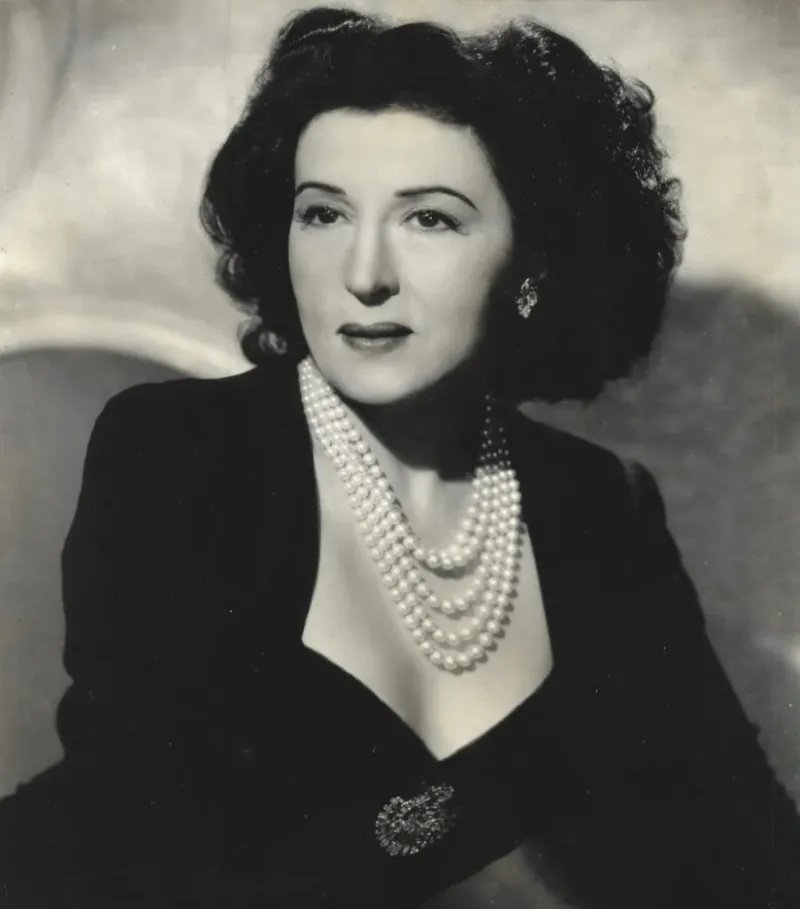
Photo: N/A studio, Public domain, via Wikimedia Commons
There's a version of Hollywood history that gets told in glossy retrospectives — the glamour, the gowns, the perfectly lit close-ups. And then there's the version Debbie Reynolds actually lived. Hers was a career built not just on raw talent, but on an almost superhuman ability to look chaos straight in the eye and deliver anyway.
If you've ever watched her on screen and thought, that looks effortless, you were probably watching the product of something that was anything but.
Learning to Swim in the Deep End — Literally
Most film fans know the broad strokes of Singin' in the Rain (1952). What fewer people fully appreciate is just how punishing the production was for a nineteen-year-old who had never trained seriously as a dancer before landing the role. Co-stars Gene Kelly and Donald O'Connor were seasoned professionals with years of rigorous movement training. Reynolds was a former baton twirler and gymnast who was essentially learning a new discipline on the fly — while the cameras rolled.
Kelly was famously demanding, and rehearsals were grinding. Reynolds once recalled that she would crawl under a piano on the MGM lot and cry between takes, her feet bleeding from hours of practice. Fred Astaire reportedly found her there one afternoon and quietly encouraged her to keep going. The fact that she not only finished the film but turned in a performance that has been celebrated for over seventy years says everything about what she was made of.
But Singin' in the Rain was just the beginning of a long pattern: Debbie Reynolds, faced with the near-impossible, finding a way through.
The Stage That Tried to Break Her
Reynolds' theatrical career brought its own brand of chaos. When she stepped into the world of Las Vegas residencies and Broadway-style productions, she was entering an environment where technical failures, last-minute cast changes, and the unpredictability of live performance were simply part of the job description.
People who worked with her in those settings consistently describe the same thing: a performer who treated every potential disaster as a problem to be solved rather than a catastrophe to be mourned. Lighting rigs that failed mid-number, audio systems that cut out during ballads, costume malfunctions that would have sent a lesser entertainer offstage — Reynolds absorbed all of it and kept moving.
One story that circulated among Vegas entertainment crews involved a full set piece that refused to move during a production number, leaving Reynolds stranded downstage with no choreography written for that position. Rather than freeze or signal for help, she improvised a full comic bit with the audience, turning a potential embarrassment into one of the biggest laughs of the evening. When the set finally shifted into place, the crowd was already in the palm of her hand.
That kind of quick thinking isn't something you can fake. It comes from decades of trusting yourself — and from genuinely loving the audience enough to protect their experience no matter what.
The Television Grind and the Smile That Never Slipped
Reynolds' television work, including her own variety specials and her beloved run on Will & Grace, brought a different set of pressures. Television production moves fast, schedules are unforgiving, and there's precious little time for the kind of careful preparation that feature film allows.
Cast and crew members from her later TV appearances frequently noted how Reynolds arrived already prepared — lines memorized, blocking intuited, energy fully engaged — even when productions were running behind or scripts were being rewritten on the day. On a medium where younger performers sometimes struggled to keep up, she was routinely the most ready person in the room.
What made that discipline remarkable wasn't just the professionalism it represented. It was the fact that Reynolds understood something essential about the relationship between a performer and an audience: the people watching at home had no idea what was happening behind the scenes, and they deserved her best regardless. That ethic never wavered, whether she was twenty-five or seventy-five.
Resilience as a Creative Tool
It would be easy to frame Reynolds' ability to overcome adversity purely as a personality trait — toughness, grit, Midwestern determination. And those things were certainly real. But there's another way to look at it: for Reynolds, the friction of difficult circumstances often produced her most creative work.
The Singin' in the Rain performance that came out of all that pain and practice has an authenticity and brightness that's hard to manufacture. The improvised stage moments born from technical failures became the stories audiences retold for years. The television appearances delivered under pressure have a crackle and immediacy that careful, leisurely productions sometimes lack.
She seemed to understand, whether consciously or instinctively, that constraints could be a kind of gift. When you can't rely on perfect conditions, you have to rely on yourself — and Debbie Reynolds, it turned out, was a remarkable thing to rely on.
What the People Around Her Saw
The testimony of collaborators is where this story really comes alive. Directors who worked with Reynolds across different decades describe a performer who never used difficulty as an excuse. Co-stars recall a colleague who kept the energy on set positive even when productions were struggling. Crew members — the people who see everything — remember someone who treated a malfunctioning prop with the same calm problem-solving energy she brought to a difficult dramatic scene.
That consistency matters. It's one thing to rise to the occasion once. It's another thing entirely to do it across a career spanning seven decades, in film, television, stage, and live performance, across every genre from musical comedy to dramatic television to Las Vegas spectacle.
Reynolds wasn't just resilient. She was reliably resilient — which is a far rarer quality, and ultimately the one that separates a long career from a legendary one.
The Legacy of Getting Back Up
When we celebrate Debbie Reynolds here at Debbie Reynolds Online, we're celebrating the full picture — not just the iconic moments, but the work and the will that produced them. The standing ovations were real. So were the bleeding feet, the broken set pieces, the rewritten scripts, and the nights when everything that could go wrong did.
What Reynolds left behind isn't just a filmography or a list of stage credits. It's a master class in what it looks like to love your craft enough to protect it — and to love your audience enough to make sure they never see the seams.
Every time something went sideways, she found a way to make it right. And more often than not, she made it better than it ever would have been if everything had gone according to plan.